The heart of Irish governance for over 700 years
Dame Street, Dublin 2
1204 - 1230
Medieval / Georgian
Dublin Castle stands as one of the most significant historic buildings in Ireland. For over seven centuries, it served as the seat of British rule in Ireland, witnessing some of the most dramatic moments in Irish history. Today, it functions as a major Irish government complex and visitor attraction, welcoming hundreds of thousands of visitors each year.
The castle's origins date to 1204, when King John of England ordered the construction of a fortress "for the custody of our treasure, for the administration of justice, and for the use of the Justiciar." The original medieval fortress was completed around 1230 and featured massive walls and four corner towers, of which only the Record Tower survives today.
Built on the site of a Viking fortress, Dublin Castle was strategically positioned at the junction of the River Liffey and the Poddle. The original "dubh linn" or "black pool" that gave Dublin its name was located in what are now the castle gardens, forming a natural defensive moat.
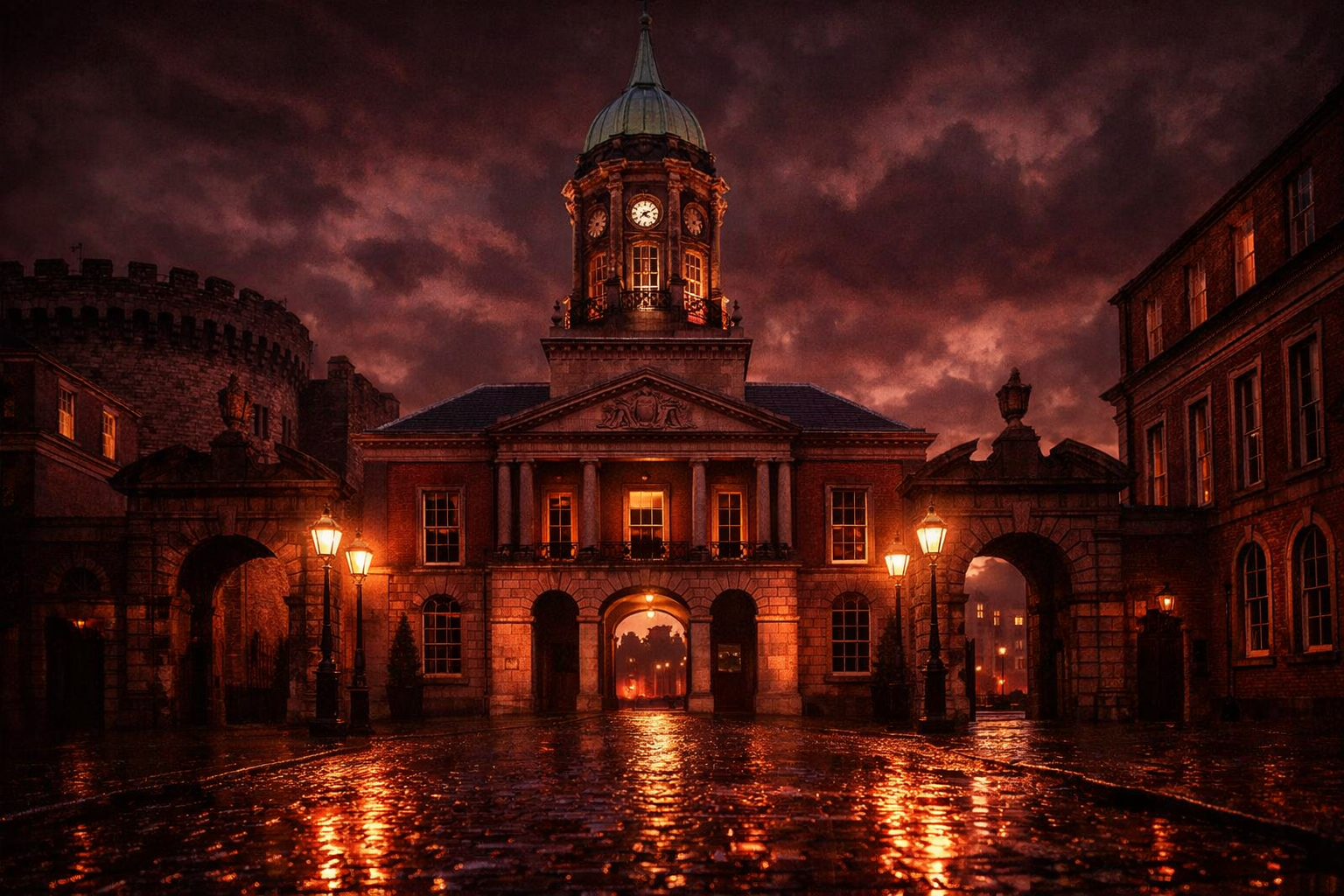
Following a devastating fire in 1684, much of the medieval castle was destroyed and replaced with the elegant Georgian buildings we see today. The State Apartments, constructed in the 18th century, represent the finest Georgian interiors in Ireland.
These magnificent rooms include St Patrick's Hall, the grandest room in the castle, with its spectacular ceiling paintings depicting key moments in Irish history. The Throne Room, Drawing Rooms, and Picture Gallery all showcase the splendor of the Georgian era, with their ornate plasterwork, crystal chandeliers, and priceless artworks.
For 700 years, Dublin Castle was the center of English, and later British, administration in Ireland. The Lord Lieutenant, the British monarch's representative, resided here and held court with all the pageantry befitting a royal residence. State balls, investitures, and elaborate ceremonies were regular occurrences.
The castle also served darker purposes. Political prisoners were held within its walls, and it was from here that British intelligence operations were coordinated, particularly during the turbulent years of the early 20th century.
On January 16, 1922, Dublin Castle was formally handed over to Michael Collins and the Irish provisional government, marking the end of over 700 years of British rule. The handover ceremony in the State Apartments was laden with historical symbolism — the last British Viceroy handing the keys of power to the representatives of the new Irish state.
Today, Dublin Castle serves as a conference center and is used for presidential inaugurations, state functions, and EU summits during Ireland's presidency of the Council of the European Union. The State Apartments remain open for guided tours, allowing visitors to walk through the rooms where history was made.
Visitors to Dublin Castle can explore the State Apartments, the medieval undercroft containing remains of the original Viking fortress and Norman tower, the Chapel Royal with its stunning Gothic Revival architecture, and the Chester Beatty Library, one of the world's great museums of manuscripts and rare books.
The castle gardens, including the tranquil Dubhlinn Gardens on the site of the original black pool, offer a peaceful retreat from the busy city streets. Whether you're interested in medieval history, Georgian architecture, or the story of Irish independence, Dublin Castle offers an unparalleled journey through Ireland's past.