
Where Dublin's name was born
Dublin Castle Grounds
Viking Era (9th c.)
Historic Garden
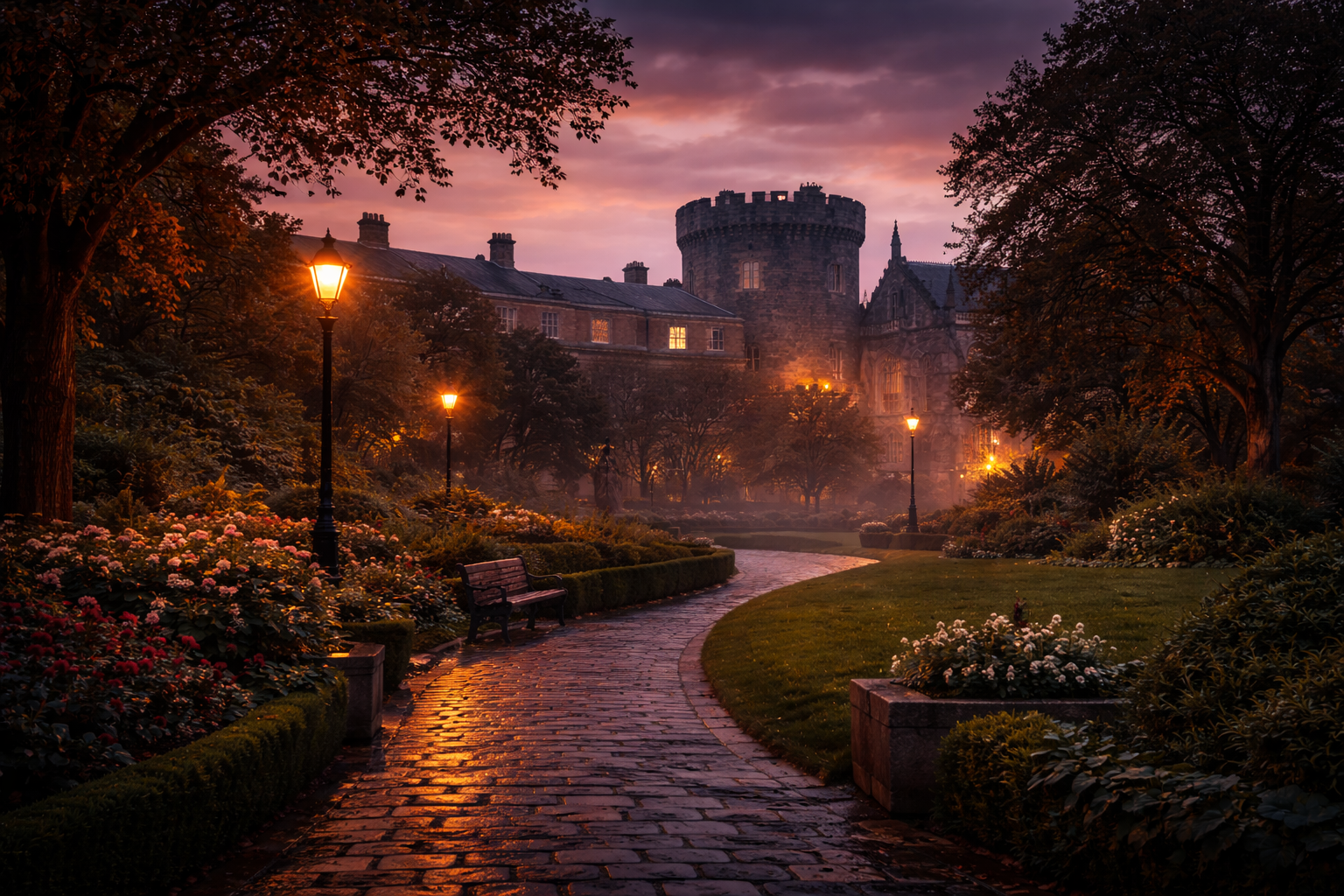
Tucked behind Dublin Castle, the Dubhlinn Gardens occupy one of the most historically significant sites in all of Ireland. This peaceful green space marks the location of the original "dubh linn" — the dark tidal pool where the River Poddle met the Liffey — that gave Dublin its name over a thousand years ago.
In the Irish language, "dubh linn" means "black pool." This dark, peat-stained pool was formed where the River Poddle widened before joining the Liffey. For the Vikings who arrived in the 9th century, this sheltered inlet provided a perfect natural harbor for their longships.
The Norse settlers established their longphort — a fortified ship encampment — around this pool, creating the nucleus of what would become one of Europe's great medieval cities. Though the original pool was drained and filled in centuries ago, its memory lives on in the city's name and in these gardens that mark its former location.
The modern Dubhlinn Gardens were created in the late 20th century as part of the restoration of the Dublin Castle complex. The design incorporates elements that reference the site's Viking heritage, including Celtic knotwork patterns in the landscaping and water features that echo the ancient pool.
The gardens are laid out in a formal style, with geometric beds, sculptural hedges, and meandering pathways. Mature trees provide shade and shelter, creating a surprisingly peaceful retreat just steps from the busy streets of central Dublin.
The gardens serve multiple purposes beyond their historical significance. They provide a contemplative space for visitors to the castle complex, a venue for outdoor events and ceremonies, and a vital green lung in the heart of the city.
Several memorials are located within the gardens, including tributes to those who served in various conflicts and to victims of historical injustices. The space has become a place of remembrance as well as recreation.
Though you won't see it today, the River Poddle still flows beneath your feet. This ancient waterway, which once fed the dark pool, now runs through underground culverts, emerging briefly at various points before joining the Liffey near Wellington Quay.
In medieval times, the Poddle provided water power for mills and served as a defensive moat for Dublin Castle. Its course determined the layout of many streets in the old city, and its presence is still felt in the topography of the area, even though the river itself is hidden from view.
The Dubhlinn Gardens are open to the public and provide free access to all. They offer a perfect spot for a peaceful break while exploring the castle complex, with benches scattered throughout for quiet contemplation.
From the gardens, you can enjoy views of the Chester Beatty Library, the rear facade of the State Apartments, and the Coach House where the library's café is located. Whether you're interested in Viking history, Georgian architecture, or simply seeking a moment of calm, the Dubhlinn Gardens offer something special.