Georgian grandeur at the heart of Dublin
Dame Street, Dublin 2
1769 - 1779
Neoclassical
Dublin City Hall stands as one of the finest examples of Georgian architecture in Ireland. Originally built as the Royal Exchange for the city's merchants, this magnificent neoclassical building has served as the headquarters of Dublin Corporation (now Dublin City Council) since 1852, and continues to be a vibrant center of civic life.
In the 1760s, Dublin was experiencing an unprecedented economic boom. The city's merchants, tired of conducting business in the open air of various coffee houses and street corners, commissioned architect Thomas Cooley to design a purpose-built exchange. Cooley won a design competition in 1769, beating rivals including James Gandon, who would later design many of Dublin's other great Georgian buildings.
Construction began immediately, and the building was completed in 1779 at a cost of £40,000 — an enormous sum at the time. The result was a masterpiece of neoclassical design, with its grand Corinthian portico, circular central hall, and magnificent dome supported by twelve columns.
The building's most striking feature is its Rotunda — a circular hall measuring 46 feet in diameter, topped by a coffered dome that floods the space with natural light. The dome is supported by twelve fluted Composite columns, creating a sense of grandeur and openness that takes the breath away.
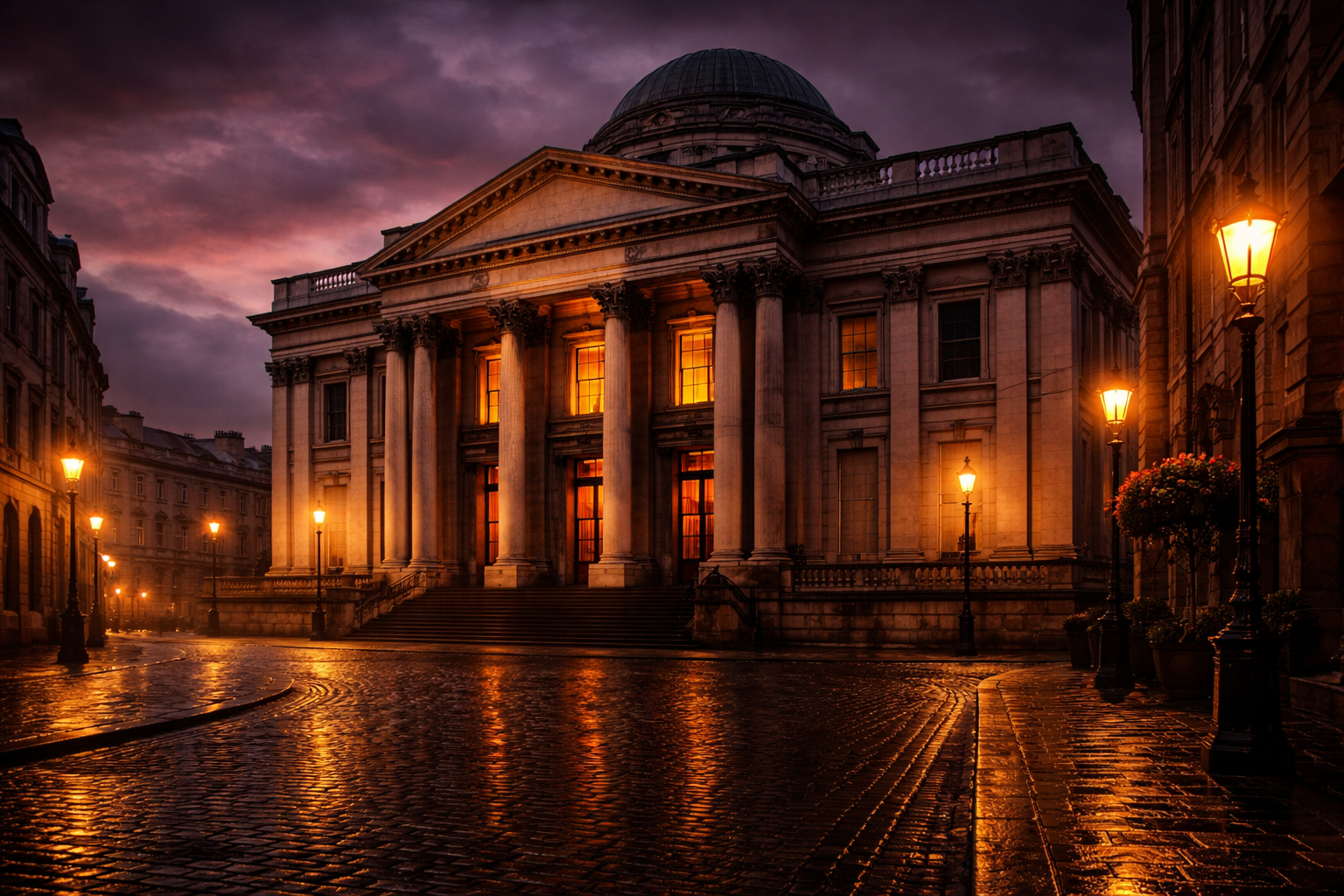
The entrance portico, with its six Corinthian columns, presents a commanding presence on Dame Street. The exterior is faced with Portland stone, giving it a warm, creamy color that glows golden in the evening light. Statues by Edward Smyth adorn the building, representing Commerce, Industry, and the Arts.
By the early 19th century, the Royal Exchange had fallen into decline as Dublin's commercial center shifted northward. In 1852, Dublin Corporation purchased the building and converted it into City Hall. The Rotunda, once filled with the bustle of merchants and traders, became the venue for council meetings and civic ceremonies.
The building witnessed many historic moments. In 1922, the body of Michael Collins lay in state in the Rotunda, as thousands queued to pay their respects to the fallen leader. It was here that many important decisions shaping modern Dublin were made.
Today, City Hall houses "The Story of the Capital," a multimedia exhibition in the atmospheric vaulted basement that traces Dublin's history from its Viking origins to the present day. Using artifacts, audio-visual displays, and interactive exhibits, the story of Dublin unfolds across nine centuries.
Visitors can see the city's original royal charter, view historic photographs and documents, and explore the various phases of Dublin's development. The exhibition provides fascinating context for the buildings and streets you'll encounter exploring the castle district.
City Hall is open to visitors, offering free access to the magnificent Rotunda and "The Story of the Capital" exhibition. The building still serves its civic function, with council meetings held in the council chamber, and the Rotunda available for public events and exhibitions.
Standing at the gateway to Dame Street and directly opposite Dublin Castle, City Hall represents the perfect starting point for any exploration of Dublin's historic heart. Its elegant facade and soaring interior remind us of the ambition and confidence of Georgian Dublin.