Gothic Revival splendor in stone
Lower Castle Yard
1807 - 1814
Gothic Revival
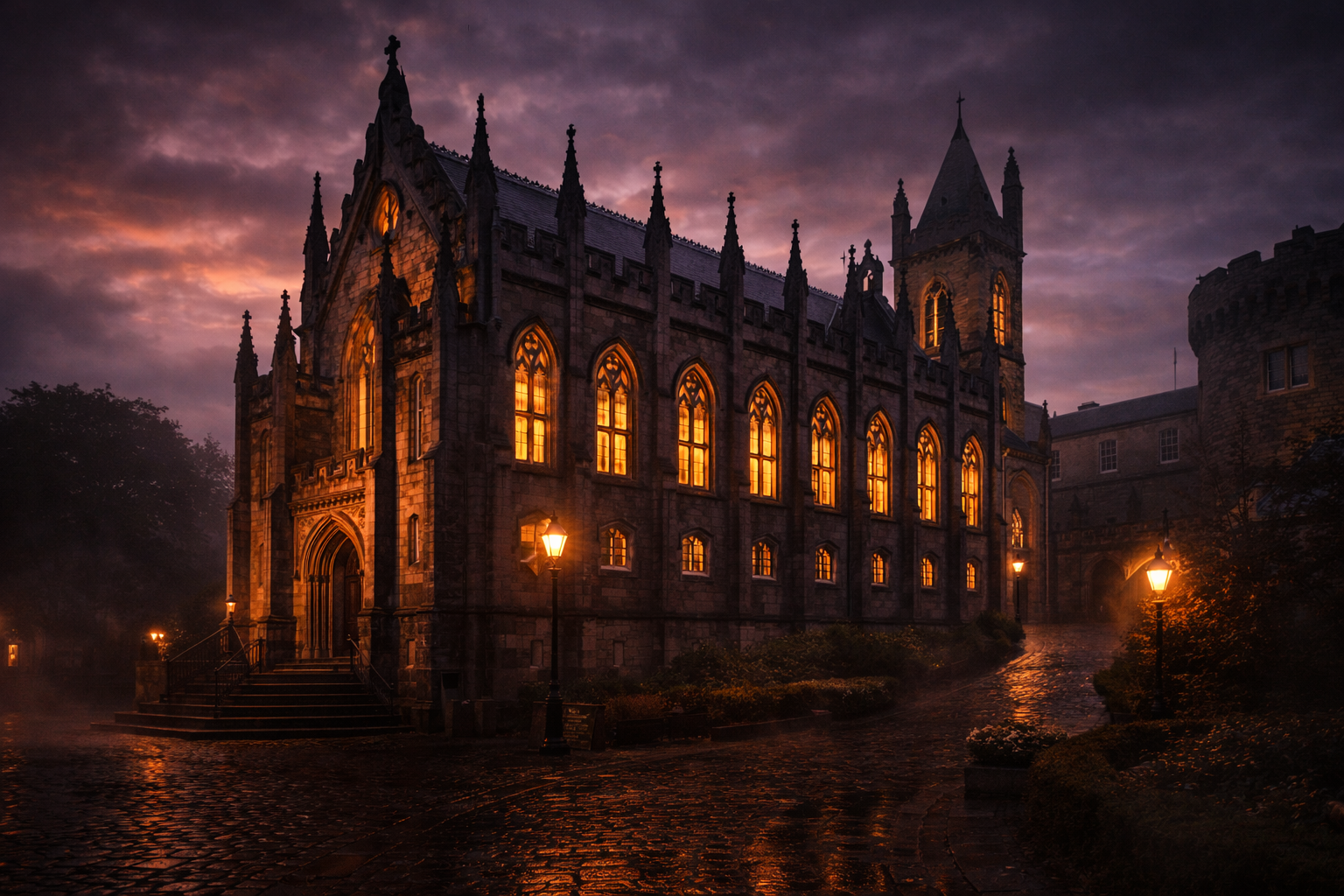
The Chapel Royal stands as one of the finest examples of Gothic Revival architecture in Ireland. Built between 1807 and 1814 to serve as the private chapel of the Viceregal Court, this exquisite building dazzles visitors with its intricate stone carvings, stunning stained glass, and beautifully preserved interior decoration.
The chapel was designed by Francis Johnston, one of the most prolific architects of Georgian Dublin. Johnston drew inspiration from medieval English perpendicular Gothic, creating a building that manages to be both authentically medieval in spirit and distinctly of its Regency era.
The exterior is faced with Dublin calp limestone, its gray tones providing a perfect backdrop for the extraordinary carved decoration. The most striking feature is the array of over 90 carved stone heads that adorn the exterior, representing figures from Irish history, mythology, and Christianity.
The carved heads are the work of Edward Smyth and his son John Smyth, master sculptors who also created decorative elements for the Custom House, the Four Courts, and City Hall. Each head is individually carved with remarkable detail and character.
The figures include St. Peter, Brian Boru (the High King who defeated the Vikings at Clontarf), Dean Swift, and various other saints, kings, and bishops. Some faces are clearly portraits of specific individuals, while others are more stylized representations of types and characters. Together, they create a visual encyclopedia of Irish history and faith.
If the exterior is impressive, the interior is breathtaking. The chapel features elaborate fan vaulting in plaster, designed to mimic the stone vaulting of medieval cathedrals. The intricate patterns create a sense of height and lightness that belies the building's relatively modest dimensions.
The stained glass windows, some of which date from the original construction, fill the interior with colored light. The woodwork, including the galleries and pews, is carved with Gothic tracery patterns, while the floor features encaustic tiles in medieval patterns.
As the Chapel Royal, this building served as the private place of worship for the Lord Lieutenant and the Viceregal household. Sunday services were highlights of the Dublin social season, attended by the cream of Anglo-Irish society in their finest attire.
The chapel witnessed coronations, baptisms, weddings, and funerals of the great and good of Viceregal Dublin. After 1922, it was deconsecrated and for many years was used for various cultural purposes.
Today known as the Church of the Most Holy Trinity, the chapel can be visited as part of the Dublin Castle tour. Occasionally it hosts concerts and special events that take advantage of its remarkable acoustics and atmospheric setting.
Standing in the Lower Castle Yard, the Chapel Royal provides a perfect counterpoint to the Georgian architecture that surrounds it. Its Gothic fantasy transports visitors to a romantic vision of the medieval past, while the extraordinary craftsmanship of its decoration rewards careful examination.